Germany's Medical Cannabis Market: Explosive Growth Reshapes Europe's Largest Opportunity
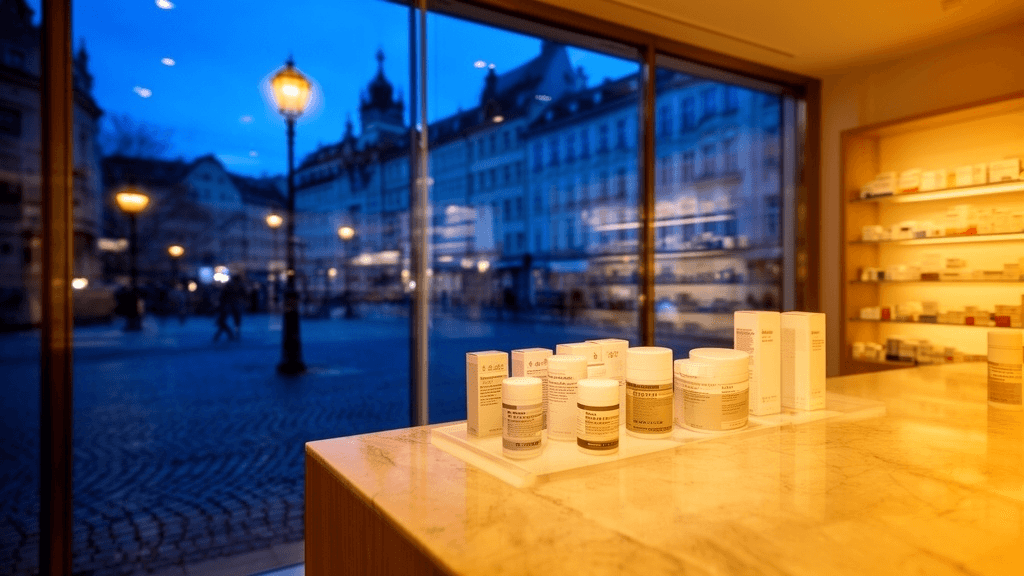
Germany imported more medical cannabis in the first nine months of 2025 than in all prior years combined, cementing its position as the world's most dynamic medical cannabis market and creating an unprecedented window for cost-competitive cultivators. From 32.5 tonnes in 2023 to approximately 200 tonnes in 2025, import volumes have grown sixfold in just two years, driven by the April 2024 Cannabis Act that removed cannabis from narcotics scheduling and unleashed a wave of telemedicine-enabled prescriptions. Patient numbers have surged from roughly 250,000 to an estimated 800,000–900,000, pharmacy prices have compressed from €8.33 to €5.23 per gram, and the market — now valued at approximately €2 billion — shows no structural signs of slowing.
From 32 tonnes to 200: the import surge that stunned regulators
Germany's medical cannabis import trajectory has entered a phase that even the Federal Institute for Drugs and Medical Devices (BfArM) failed to anticipate. Official BfArM data shows imports of 72 tonnes in 2024 — a 122% increase over 2023's 32.5 tonnes — followed by 142.3 tonnes in just the first three quarters of 2025.
The growth overwhelmed BfArM's planning. The agency had set a 2025 import estimate of 122 tonnes with the International Narcotics Control Board (INCB), a figure exhausted by mid-September. BfArM temporarily paused new import approvals before raising the quota to 192.5 tonnes in late October 2025. Even this expanded ceiling was likely breached by year-end, with industry projections placing full-year 2025 imports at 200 or more tonnes.
The forward trajectory is even more striking. Industry presentations project the market will require 400+ tonnes annually by 2027. For context, Canada's entire domestic medical cannabis market consumes roughly 150 tonnes per year — Germany's import demand alone now exceeds that figure.
| Year | Import volume (tonnes) | Year-on-year growth |
|---|---|---|
| 2021 | 20.6 | +124% |
| 2022 | 24.9 | +21% |
| 2023 | 32.5 | +30% |
| 2024 | 72.0 | +122% |
| 2025 (est.) | ~200 | +178% |
| 2026 (proj.) | 250–350 | +25–75% |
Domestic German production remains negligible. Only three licensed cultivators operate — producing a combined 2.3–2.6 tonnes annually, barely 1% of total supply. Growing cannabis indoors in Germany is expensive, and imports will dominate the supply picture for the foreseeable future.
Nearly a million patients and counting
The most important structural driver behind Germany's import surge is patient growth. Before the Cannabis Act took effect on 1 April 2024, Germany had approximately 250,000 medical cannabis patients. Eighteen months later, that figure has roughly quadrupled to an estimated 830,000–930,000.
The critical distinction is that the post-April 2024 explosion has been driven almost entirely by self-paying private prescriptions rather than insurance-covered treatment. Before the reform, roughly 60% of prescriptions were self-pay; after it, that ratio shifted to approximately 80% self-pay and 20% insurance-reimbursed. GKV-covered prescriptions grew only about 9% year-on-year, while total cannabis flower imports surged 170% in the second half of 2024 alone.
Telemedicine has been the decisive mechanism. Germany's largest digital cannabis platform reported prescription volumes increasing 3,300% between March 2024 and December 2025, serving over 500,000 patients through fully digital consultation processes. Average monthly treatment costs have fallen to €30–50 for many patients, down from €100+ before the reform.
The patient base skews heavily male (83% in pharmacy dispensing data) with an average age of 39 for flower prescriptions. Chronic pain accounts for roughly 71% of prescriptions, followed by spasticity (11%), with sleep disorders, ADHD, depression, and anxiety forming the remaining indications.
Regulatory crosscurrents: what the Cannabis Act changed and what comes next
The April 2024 Cannabis Act (Cannabisgesetz, or CanG) represented the most significant drug policy reform in German history. The Medical Cannabis Act (Medizinal-Cannabisgesetz, or MedCanG) contained the provisions most consequential for the medical market.
The MedCanG's transformative change was removing cannabis from the Narcotics Act (Betäubungsmittelgesetz, BtMG). This eliminated the requirement for narcotic prescription forms, enabled standard e-prescriptions, extended prescription validity from 8 days to 28 days (or 3 months for private prescriptions), and allowed mail-order pharmacy dispensing. The bureaucratic burden that had discouraged physicians from prescribing was dramatically reduced.
However, the regulatory pendulum is already swinging. Germany's February 2025 snap election brought the CDU/CSU into government in coalition with the SPD. While the CDU had campaigned on full repeal, SPD negotiators blocked rollback. Complete repeal is now considered unlikely — re-scheduling cannabis as a narcotic would be legally complex, over 300 cultivation clubs are already licensed, and cannabis-related crime has fallen 60–80% according to the first evaluation report.
The real battleground is the MedCanG amendment bill, approved by the federal cabinet in October 2025. Key proposed restrictions include mandatory in-person consultation before any initial cannabis prescription (ending telemedicine-only pathways), annual in-person follow-ups, and a ban on mail-order dispensing of cannabis flowers. The bill's fate remains uncertain — SPD parliamentarians have publicly opposed key provisions.
Canada dominates but competition is intensifying
Two countries account for approximately 80% of Germany's cannabis imports: Canada and Portugal. Their trajectories are diverging in important ways.
Canada remains the single largest supplier, shipping 33.2 tonnes in 2024 (46% market share) and an estimated 66.2 tonnes through Q3 2025. However, Canada's market share is declining — from 58% in Q1 2024 to approximately 47% by mid-2025 — as competitors from lower-cost geographies gain ground. Portugal has emerged as the fastest-growing major supplier, shipping 17.2 tonnes in 2024 (24% share) and approximately 42 tonnes through Q3 2025. Portugal's growth reflects its dual role as both a cultivation origin and a processing hub — significant volumes of Canadian, African, and other-origin GACP flower are shipped to Portugal for EU-GMP processing before re-export.A group of emerging suppliers is gaining share rapidly. North Macedonia grew 56% quarter-on-quarter in Q3 2025. Spain more than doubled its volumes. Colombia re-emerged as a meaningful contributor. South Africa grew 54% in Q3 2025, and Lesotho added 34%. German importers are actively seeking new origins to reduce concentration risk, improve cost structures, and access unique genetics.
Prices compress as supply outpaces demand growth
The most consequential market trend for prospective suppliers is aggressive price compression. Market data shows the average pharmacy price per gram falling from €8.33 in January 2025 to €5.23 by December 2025 — a 37% decline in twelve months. By late 2025, flower products priced below €6 per gram accounted for approximately 80% of supply on German pharmacy platforms.
The number of available flower products on German pharmacy platforms grew from 468 in early 2025 to over 724 by year-end — a 55% increase in product listings. Wholesale prices for imported GACP flower sit in the range of €1.50–3.50 per gram depending on origin, THC content, and quality.
The pricing environment creates a dual reality. For patients, cannabis has become genuinely affordable. For producers, the squeeze is real. Margins that were comfortable at €10+ per gram become razor-thin below €6. The survivors will be those with the lowest landed cost in Germany, the strongest distribution partnerships, and the most differentiated product portfolios.
Insurance reimbursement dynamics add another layer. The roughly 230,000 GKV-covered patients pay only a co-payment of €5–10 per dispensing. The 500,000–600,000 self-pay patients, however, are highly price-conscious and increasingly gravitate toward budget products. This bifurcation is reshaping the competitive landscape, with premium Canadian flower losing share to lower-cost alternatives.
EU-GMP, GACP, and what importers actually require
The regulatory architecture operates on two complementary standards: GACP governs cultivation through initial post-harvest processing, while EU-GMP applies to all subsequent manufacturing, processing, packaging, and quality control.
The critical insight for prospective African suppliers is that cultivation itself does not require EU-GMP certification. The current market consensus allows GACP-certified flower to be imported into the EU and processed at an EU-GMP facility before reaching pharmacies. This pathway dramatically lowers the barrier for non-EU cultivators, though it adds cost and reduces the cultivator's control over the value chain.
Once product reaches Germany, it must comply with European Pharmacopoeia standards. Testing covers THC/CBD content, terpene profiles, pesticides, heavy metals, microbial contamination, mycotoxins, and moisture content. A German-based Qualified Person (QP) must release every imported batch. Recent enforcement actions underscore that German authorities are actively scrutinising compliance.
Africa's moment: cost advantages meet a price-compressed market
South African cannabis is already on German pharmacy shelves. Several South African cultivators have partnered with German distributors, and from Lesotho, MG Health became the first African company to export medical cannabis to the EU in 2021. Production costs of approximately $0.50–0.93 per gram illustrate the fundamental cost advantage that African origins hold over Canadian indoor cultivation at $1.10–2.50 per gram.
South Africa's competitive advantages are structural and durable: year-round growing seasons with abundant natural light, labour cost geo-arbitrage with all-in production costs estimated at $0.50–1.50 per gram, SAHPRA's PIC/S membership giving South African certifications international recognition, and growing domestic EU-GMP processing infrastructure.
However, African cultivators must navigate real barriers. EU-GMP certification remains the primary hurdle. SAHPRA licensing demands fully constructed and compliant facilities before approval. Logistics costs add roughly $0.30–0.50 per gram. And in a market where prices are compressing toward €5 per gram at retail, every cent of landed cost matters.
What 2026 holds: navigating growth amid regulatory uncertainty
The German medical cannabis market enters 2026 at an inflection point. The import volume trajectory points toward 250–350 tonnes if the current regulatory framework remains broadly intact, with longer-term projections of 400–600 tonnes by 2027–2028. Patient numbers could approach or exceed one million. The total addressable market — Germany's estimated 4.5–6.2 million cannabis consumers — remains vastly underserved, with current medical patients representing only about 13% of penetration.
Pricing will continue to compress. The average price per gram is likely to breach €5 and could approach €4 by late 2026. This relentless price compression makes cost of production the decisive competitive factor for cultivators. African origins with all-in landed costs below €2.50 per gram have a viable path; those above €3.50 will struggle.For new African cultivators evaluating market entry, the strategic playbook is clear: partner with established German importers, achieve GACP certification at minimum, secure off-take agreements before building, and differentiate through unique genetics, terpene profiles, and sustainability narratives. The structural trajectory of demand remains decisively upward.
Conclusion
Germany's medical cannabis market has undergone a transformation without precedent. In barely two years, the country moved from importing 32 tonnes annually to consuming over 200, created a patient base approaching one million, and built a distribution infrastructure of 200+ licensed wholesalers and 700+ flower products. The structural drivers — an ageing population, chronic pain prevalence, physician education gaps closing, and insurance coverage expanding — support continued growth.
For South African cultivators, the opportunity demands strategic precision. The market rewards low-cost, EU-GMP-compliant, reliably consistent supply delivered through established German distribution partnerships. The question for new entrants is not whether Germany needs more supply — at a projected 400–600 tonnes annually by 2027–2028, it unambiguously does — but whether they can deliver at a cost structure that remains profitable when pharmacy prices sit at €5 per gram and falling.
Stay informed
European Cannabis Market Intelligence — Monthly
Regulatory updates, market analysis, and cultivation insights for pharmaceutical cannabis professionals.
Related Articles
Africa's Bid to Become Europe's Cannabis Breadbasket
10 February 2026 · 10 min read
Read Article →From Seed to Shipment: A Practical Guide to Exporting Medical Cannabis to Europe
14 February 2026 · 12 min read
Read Article →Sealed Venlo Greenhouses vs. Indoor Cannabis: Why Greenhouse Technology Delivers Pharmaceutical Grade at Lower Cost
8 February 2026 · 8 min read
Read Article →